
Kettlebell Sport: A Comprehensive Overview
Introduction
When one's passion for a sport is all - encompassing, becoming an integral part of daily life, it's easy to overlook the fact that not everyone is familiar with or comprehends its essence. This is a common occurrence for me, as kettlebell sport is deeply ingrained in my existence. I engage in training for kettlebell sport, mentor my athletes in this discipline, and also write about it. My wife, too, is a kettlebell lifter and coach. Despite this, I'm often startled when someone reveals their complete ignorance of kettlebell sport. Nevertheless, I'm always eager to provide an explanation.
Kettlebells: Beyond Fitness
Most gym - goers and trainers have encountered kettlebells. These distinctively - shaped weights are no longer the novelty they were a decade ago and have firmly established their place in numerous training facilities. However, the majority of people perceive and are taught to use these handle - equipped cannonballs merely as a fitness tool. Many athletes remain unaware that they have served as an essential component of a fully - fledged sport for over sixty years.
The Disciplines of Kettlebell Sport
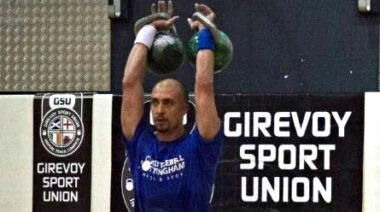
The two primary disciplines of the sport are the biathlon, consisting of two separate events - the jerk and the snatch, and the long - cycle, which is a combination of clean and jerk.
Historical Development
The first official girevoy sport (the original Russian name for the sport) competition took place in 1948 in the former USSR. Its development spanned the 1950s and 1960s, primarily driven by the military, who recognized the benefits of this training method for troops. In the 1970s, girevoy sport was incorporated into the National Sports Federation as the official ethnic sport of Russia.
Global Expansion
It started gaining popularity in Britain around the second half of the 2000s. After operating as an underground sport for a few years, it now has competitions organized and sanctioned by national bodies such as the Girevoy Sport Union and the Organization of Kettlebell Sport England. In the U.S., the United States Girevoy Sport Federation was founded in 2003.
Defining Kettlebell Sport
The most apt description of kettlebell sport is "endurance weightlifting." In all lifts, athletes have a maximum of ten minutes to complete as many high - quality repetitions as possible without placing the kettlebell(s) on the ground. The athlete with the highest number of reps is declared the winner. In the biathlon, there must be a minimum break of thirty minutes between the jerk and the snatch.
Gender - Specific Rules
Men typically complete the jerk portion of the biathlon and the long - cycle with two kettlebells, while women traditionally use only one kettlebell. However, an increasing number of female athletes are now opting for two - arm lifts. The snatch is contested using one kettlebell in both male and female categories. When using one kettlebell, whether in the snatch (for both genders) or in the women's jerk and long - cycle, athletes are permitted to change hands only once during the set.
Kettlebell Weights
Local and National Levels
In the UK, for local and national events, men usually use kettlebell weights of 16kg, 20kg, 24kg, 28kg, and 32kgs, while women use 8kg, 12kg, 16kg, 20kg, and 24kg.
International Level
At the international level, the choice of kettlebell weights is more restricted. Lifters are divided into two categories: amateur and professional. Male amateurs use 24kg kettlebells, and female amateurs use 16kg kettlebells. Professional male athletes compete with 32kg kettlebells, and professional women use 24kg kettlebells.
Veteran Category
There is usually a veteran category in international competitions. The weights used can vary depending on the federation organizing the meet and the lifter's age. Typically, veteran males use 24kg and veteran females use 16kg. Currently, women's international competition only includes the snatch, but this may change due to the rapidly evolving nature of the sport. It's also important to note that athletes compete in bodyweight categories. Men's categories range from 63kg to 95 + kg, and women's categories range from 53kg to 68 + kg.
Training a Kettlebell Sport Athlete
Training Principles
Training methodologies vary significantly among athletes and coaches. However, one constant principle is the need for supreme efficiency. Without efficient technique, achieving the high number of repetitions required for success in the sport is impossible. All lifts are executed with the aim of expending only the exact amount of energy necessary and leveraging momentum during the concentric phase. To develop such efficient technique, the jerk, snatch, and long - cycle must be practiced patiently and consistently.
Physical Requirements
The sport demands specific flexibility, muscular strength endurance, power endurance, and a well - developed aerobic capacity. Therefore, these elements should be incorporated into the athlete's General Physical Preparation (GPP) program in some form. The eccentric portion of the lift is minimized, which explains why kettlebell sport athletes exhibit relatively less hypertrophy compared to powerlifters or Olympic weightlifters, despite the substantial amount of weight lifted in each training session.
Tips for Beginners
For those interested in competing, it is advisable to seek out a reputable coach. A coach can teach the technical nuances of the lifts and assist in formulating optimal training cycles. If a local coach is not available, consider a coach offering online training. Ensure that the coach has a proven track record on the platform, either through personal achievements or those of their athletes.
In the United States, the best way to get involved in kettlebell sport is to visit the United States Girevoy Sport Federation website to find out about competition schedules and venues. A great initial step is to attend a competition and gain a firsthand understanding of the sport.
Related Content
Hardstyle, Girevory, or CrossFit? How to Decide Which Kettlebell Style Is Best
An Introduction to Kettlebell Sport Training Methodologies
7 Reasons Kettlebell Sport Is the Everyman (or Everywoman) Sport
New on Breaking Muscle Today
Photo 1 courtesy of Laurence Clemente.
Photo 2 courtesy of Shutterstock.
The Beginner's Guide to Competing in Kettlebell Sport
•
Author: Kelton
•
Fitness
Life
Share this article